Djarum controls Narasi 🗞️. Xendit appoints new leader for expansion 💳. Scam trust crisis hits ASEAN consumers 🛡️
Dear subscribers,
We’re back with a roundup of key updates from Indonesia and the Southeast Asian startup ecosystem. This week, Djarum Group moves to take control of media platform Narasi through Global Digital International, Xendit promotes Nazim Ali to president as it broadens its regional footprint, and Indonesia’s paylater plus online lending debt reaches Rp150.8 trillion in July.
We also look at Indosat’s new Zankore venture with Ooredoo, NVIDIA, and Nokia targeting 1 GW of AI infrastructure, Grab’s reported talks to acquire a majority stake in Atome, and DBS plus Citi completing a weekend tokenized dollar payment. Finally, our What’s Next section examines the GSMA ASEAN Consumer Scam Report 2026 and why mobile operators are central to building digital trust.
Here’s everything you need to stay ahead this week.
Stay sharp,
The DailySocial Team
Here is a roundup of interesting updates from Indonesia’s startup ecosystem over the past week that you shouldn’t miss:
Djarum Group Takes Control of Narasi. Through its investment vehicle Global Digital International, Djarum Group has secured shareholder approval to acquire PT Narasi Citra Sahwahita, the company behind Indonesian digital media platform Narasi. The takeover builds on Djarum’s investment relationship with Narasi since 2018, including debt financing later converted into equity, although the transaction value and final ownership structure have not been disclosed. [Read more]
Xendit Appoints Nazim Ali as President. Jakarta-based payments infrastructure company Xendit has promoted Nazim Ali to president, expanding his remit to include legal, risk, compliance, and operations while he continues to lead global go-to-market activities. The leadership change comes as Xendit broadens its Southeast Asian footprint and prepares for further international expansion, with the new structure intended to better align growth and control functions. [Read more]

Nazim Ali, President of Xendit / Xendit Indonesia’s Paylater and Online Lending Debt Reaches Rp150.8 Trillion. Outstanding consumer debt from bank and financing-company paylater products, combined with online lending, reached Rp150.8 trillion in July 2026. Bank BNPL grew 31.22% year on year to Rp31.56 trillion, while financing-company paylater rose 54.65% to Rp13.62 trillion and online lending grew 24.76% to Rp105.63 trillion, with gross NPF at 3.03% and TWP90 at 4.32%. [Read more]
Zankore by Indosat Targets 1 GW AI Infrastructure Platform. Indosat, Ooredoo Group, NVIDIA, and Nokia have launched Zankore to develop an AI compute and cloud platform in Indonesia, targeting 1 GW of NVIDIA DSX AI Factory capacity across Asia-Pacific. The venture plans to deploy an initial 100 MW of NVIDIA infrastructure and reach around 200 MW in the first half of 2027, positioning Indonesia as a potential regional hub for enterprise and agentic AI. [Read more]

Regional dynamics could also have a direct bearing on Indonesia’s startup landscape. Here’s a rundown of the latest developments:
Grab Reportedly Eyes Majority Stake in Atome. Grab is in talks to acquire a controlling stake in Singapore-based buy now, pay later provider Atome Financial, potentially valuing the Advance Intelligence Group unit at more than US$2 billion. The deal would strengthen Grab’s consumer finance strategy beyond its existing PayLater offering, while Atome’s 80% revenue growth to US$470 million in 2025 and second consecutive year of pretax profitability make it an attractive target. Discussions remain ongoing, with no final agreement announced.
DBS and Citi Complete Weekend Tokenized Dollar Payment. DBS and Citi have completed a cross-border US dollar payment between Singapore and the United States in minutes over a weekend, using tokenized deposits on Swift’s Digital Ledger. The transaction highlights how bank-issued digital deposits could enable faster, around-the-clock settlement without relying on stablecoins, as Swift prepares to expand its infrastructure pilot with 17 banks.
Digital fraud or scams in Southeast Asia remain a serious threat eroding public trust in the digital ecosystem. A recent GSMA report, the ASEAN Consumer Scam Report 2026, reveals that 45% of scam cases reported by consumers in six ASEAN countries, namely Indonesia, Malaysia, the Philippines, Singapore, Thailand, and Vietnam, remain unresolved. This situation persists even as consumers have increased their self-protection efforts, leading to declining trust in communication channels, digital platforms, and data-sharing practices.
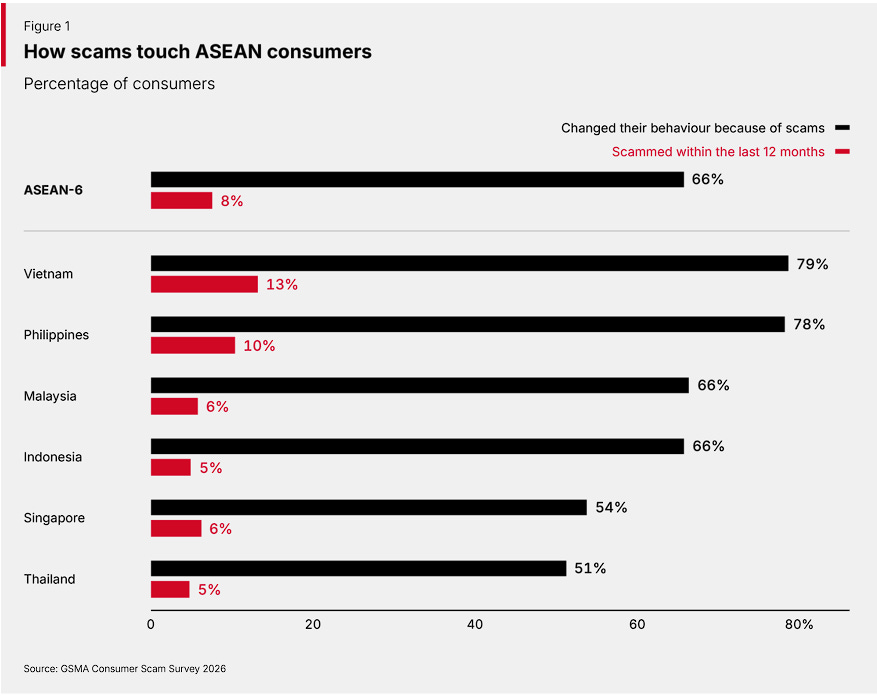
The financial impact of digital scams is also significant. Around 8% of surveyed consumers reported falling victim to scams in the past 12 months, with 68% of them suffering financial losses. However, fund recovery for victims remains a major challenge: 82% of victims who experienced financial losses were unable to recover their money, while only 10% managed to regain their full losses.
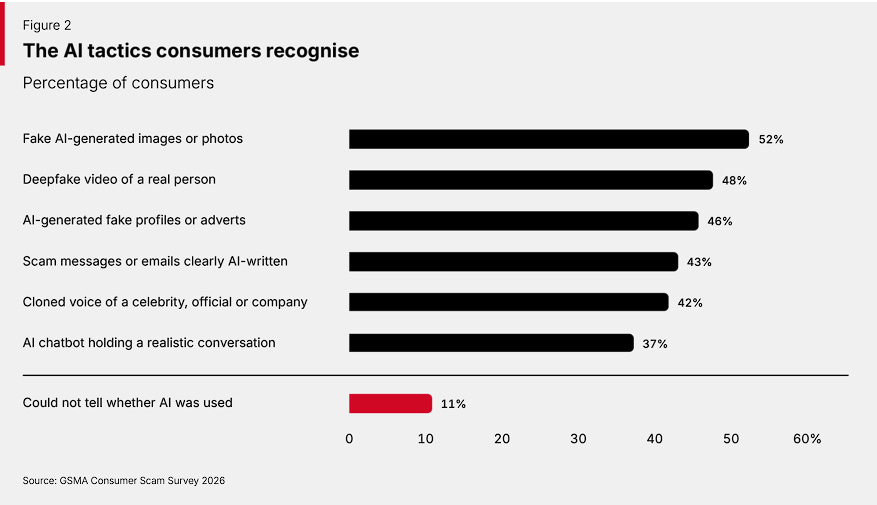
The threat of digital fraud is becoming increasingly complex with the advancement of artificial intelligence (AI) technology. GSMA notes that AI enables scammers to use sophisticated techniques such as phishing, deepfakes, voice cloning, and digital identity forgery. Nearly nine out of ten ASEAN consumers surveyed have recognized at least one form of AI used in scams. Messaging apps have now become the most common channel for scams, with 41% of cases occurring through these platforms.
GSMA emphasizes that strengthening digital trust requires coordination among governments, regulators, mobile operators, financial institutions, digital platforms, and other stakeholders. In its Digital Nations 2026 report, GSMA identifies four key foundations of digital trust: identity, communication, resilient networks, and collective intelligence. Mobile operators are seen as playing an expanded role in building a trusted ecosystem, including identity verification, network security, fraud prevention, and intelligence sharing to detect and prevent cross-border scams across ASEAN.