Grade I Heritage Walk: Walking to Church Of St Mary from The King’s Head — 4.4-Mile Circular via Brabourne
Church Of St Mary — a Grade I listed building 4.4 miles from The King's Head, Wye.
Church Of St Mary is a Medieval brick in Brabourne, 4.4 miles from The King’s Head. The NHLE entry singles out its gable. Historic England listed it in 1957.
Walking to Church Of St Mary — 4.4 miles from Wye
Rated Moderate at 4.4 miles with about 80m of ascent. Allow around 175 minutes at a steady 3 mph pace; add 15–20 minutes for photographs at the building and a pause at a viewpoint.
Why Church Of St Mary is Grade I listed — the 1957 designation
The building or site itself may lie within the boundary of more than one authority.
- Grade:
- I
- Listed:
- 1957
- Parish:
- Brabourne
- District:
- Ashford
- Statutory address:
- Church Of St Mary, The Street
- NHLE entry:
- 1232793 ↗
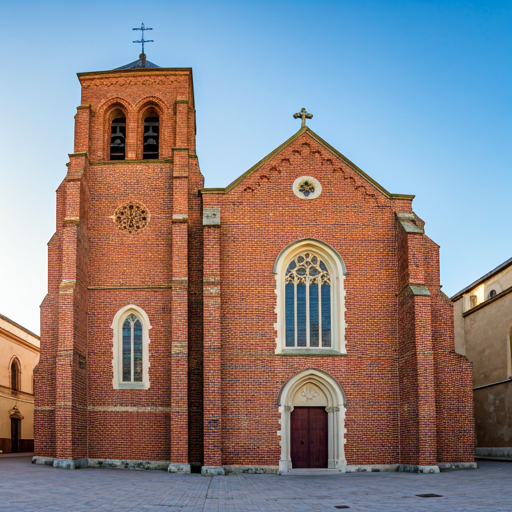
TR 14 SW BRABOURNE THE STREET (south side) 5/29 Church of St. Mary 27.11.57 GV I Parish church. Late C12 on a considerable scale, due to ownership of Horton Priory, with C13 south aisle, C14 chapel, C15 fenestration and top to tower. Restored late C19. Flint, with ragstone, with plain tiled roof. Nave with west tower, south aisle and north porch. Chancel with south chapel. Three stage west tower, the top stage a C15 rebuilding in squared ragstone. Large 5 times offset buttresses to south. Label headed belfry openings, C19 Perpendicular style west window, and shafted C12 west doorway with roll mould and hood. Three offset buttresses to south aisle, with raised brick eaves, restored C14 2 light with quatrefoil window. Sharply pointed roll moulded south doorway. Nave clerestorfy with 3 lancets on string course. South chapel with C14 fenestration with encircled cinquefoils over cinquefoiled lights, with hoodmoulds on carved heads. Chancel with pilaster strip buttresses, 4 light Perpendicular east window with string course and gable cross. Two round headed lancets in north wall, and unusual priest’s doorway, with billet moulded outer order, the 3rd innermost order with three lobed pendant suspended from convex tympanum. Nave north wall with 3 light Perpendicular window. Timber north porch with moulded bargeboard with pendant with double boarded doors and mullioned sidelights. The inner door with overlapped boards and strap hinges in double wave-moulded doorway with hood and decayed water stoup. Interior: large plain C12 tower arch with pointed C12 inner arch with moulded abaci; rebated lancet openings to clerestorey and roof of 4 crown posts. South arcade of 3 bays of double chamfered arches on round piers of Bethersden marble with deeply undercut capitals. Identical arch from south aisle to south chapel. Roll moulded string course in south aisle, raised over doorway, and lean-to roof. Large chancel arch with nook shafts and voluted capitals and abaci with carved head stops. Roll moulded and billet moulded arch and hood. Chancel with string course enriched with fleur-de-lys and dogtooth. The attached shafts to north and south resting on this stringcourse, and twisted capital in south-west corner, indicate original intention to vault the chancel. Present roof of crown posts, the easternmost bay ceiled. Reveal of C13 lancet, blocked since construction of C14 south chapel. Two C14 segmentally headed tomb recess/through arches to south chapel, with wave mould and head stops, and integral depressed arched doorway. Chapel, with exposed jambs of earlier external indows to west and north walls and lean-to roof. Fittings: reredos and altar chancel, raised c.1600 as a memorial to the Scott family, with 5 bay arcaded reredos with Ionic pilasters and frieze and altar, with the progress of the family’s Arms from 1290 to 1562. Three cartouches at top with Arms, the centre the full armorial bearings. Inscription: The memorial of the just shall be blesed but the name of the wicked shal rot. Made for Reginald Scott, founder of the Magic circles of England U.S.A. Roundheaded aumbrey in north wall. Restored trefoil headed piscina in square headed surround, part of the easternmost tomb recess between the chancel and south chapel. Cusped piscina in south chapel and aumbrey in north wall. C17 altar table with twisted legs and fillet moulded stretcher. C17 lecturn and octagonal pulpit, or C19 in C17 style. C20 brass chandeliers and screen to tower. Medieval quarter-log stairs in tower. Glass: chancel north window with original C12 floral glass, amongst the earliest surviving complete windows in the country. Monuments: Chancel: heart shrine, c.1300. Bethersden marble, with incised cross in circle and side indents (for mosaics or inscription). Trefoiled triangular back plate with ball flower and crockets and relief shield.. The heart it contained reputed to be William de Valence (d.1296) or John Balliol, founder of Balliol College. Sir John Scott, (comptroller of the Household to Edward IV) d.1485. Tomb recess on north wall. Traceried panelled chest with shields with fluted octagonal piers to traceried frieze and battlemented top. Grotesque enriched spandrels with ribbed soffit. The 2 tomb recesses in south wall now empty. South Chapel: hollow chamfered tomb recess for William Scott, who rebuilt the chapel (as Trinity Chapel) 1420-30 (see brasses). Small (child’s?).coffin lid in floor with fleury calvary cross. C18 plaque with brass shield and an apparently Welsh inscription on north wall, and white marble architectural wall plaque on south wall to Arthur Scott, d.1756. Small black marble wall plaque in south aisle to William Richards, erected 1672, with Latin inscription in raised and fielded surround with scrolled and swagged cartouche and scrolled pediment. Nave north wall: Ellen – wife of John Richards, d.1720. Plaque with cornice and winged cherubs on apron. Two lead wall plaques on south aisle and north nave walls, identical, recording the churchwardens and restoration 1700, inscribed: T W , with relief roses and horses, recording T T Thomas Webb and Thomas Thompson Brasses: In the south chapel: Sir William Scott, d.1433 (swordbearer to HV). Large brass of a knight, feet resting on a greyhound. Denis Harbord, d.1450. 35 inch brass of woman with flowing hair. Sir William Scott, d.1524, knight, 26 ½ inches. Dame Elizabeth Poynings, d.1528, 35 ½ inches. The jousting helm of Sir William Scott, c.1510, and that of Sir Thomas Scott, late C16 survive in chancel. Royal Arms of George II in south aisle. (See B.O.E. Kent II 1983 155-7). Listing NGR: TR1030441783
Listing metadata — from the National Heritage List for England
- NHLE entry number:
- 1232793
- Heritage Category / Grade:
- Listed Building, Grade I
- First listed:
- 1957
- Capture scale:
- 1:2500
- Grid reference (NGR):
- TR 10360 41678
- BNG Easting / Northing:
- 610,360 E / 141,678 N
- Coordinates (WGS84):
- 51.135721°N, 1.005522°E
- Parish:
- Brabourne
- District:
- Ashford
- Kent Downs landscape zone:
- Brook and the Spring-Line Villages
- Distance to North Downs Way:
- 3.99 miles
- Distance from The King's Head:
- 4.39 miles
- Walk duration (round trip):
- 175 minutes
- Elevation gain:
- 80 m
- Difficulty rating:
- Moderate
Architectural features at Church Of St Mary
Keywords extracted from Historic England’s Official List Entry — each one is genuinely in the designation prose, not inferred.
The only Grade I walk in Brabourne
Buildings listed in the 1950s near Wye
| Listing | Grade | Parish | Distance from Wye | Listed |
|---|---|---|---|---|
| Walking to Wye Bridge from The King’s Head — 0.4-Mile Easy Stroll via North Downs Way | Grade II* | Wye with Hinxhill | 0.4 miles | 1952 |
| Walking to Spring Grove And Walled Garden Attached from The King’s Head — 0.8-Mile Easy Stroll via North Downs Way | Grade II* | Wye with Hinxhill | 0.8 miles | 1952 |
| Grade I Heritage Walk: Walking to Church Of All Saints from The King’s Head — 1.6-Mile Easy Stroll via North Downs Way | Grade I | Boughton Aluph | 1.6 miles | 1957 |
| Walking to Boughton Court from The King’s Head — 1.6-Mile Easy Stroll via North Downs Way | Grade II* | Boughton Aluph | 1.6 miles | 1952 |
| Grade I Heritage Walk: Walking to Church Of St Mary from The King’s Head — 1.7-Mile Easy Stroll via Brook | Grade I | Brook | 1.7 miles | 1957 |
The landscape around Church Of St Mary — Brook and the Spring-Line Villages
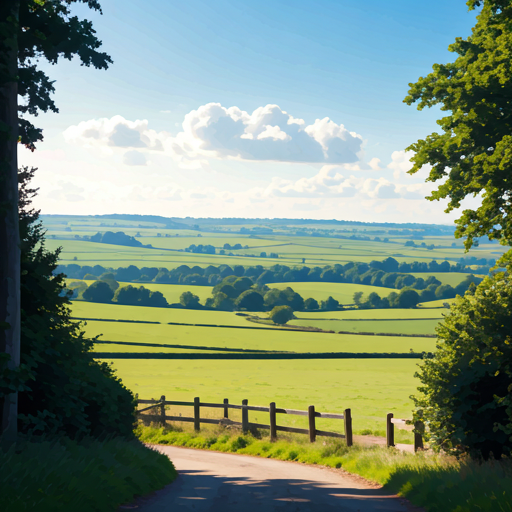
South of the North Downs escarpment, the land around Brook and the adjacent parishes is a quiet band of spring-line settlement where chalk meets gault clay. The villages grew where water came to the surface, and each church in this belt — many Grade I listed and of Norman or earlier origin — occupies one of those spring-heads. Between them the land is a patchwork of sheep pasture, small fields of winter cereals, and hedgerow-enclosed paddocks of yew, hawthorn and blackthorn. The combination of intact medieval churches, surviving ancient hedgerows, and the dramatic backdrop of the downs above is a landscape character that has scarcely changed in 400 years.
Pubs within 3 miles of Church Of St Mary
| Pub | Distance from route | Address | Postcode | Authority |
|---|---|---|---|---|
| The Five Bells open_in_new | 0.7 miles | The Street, Brabourne, TN25 5LP | TN25 5LP | Ashford |
| The Honest Miller open_in_new | 2.8 miles | Brook, Ashford, TN25 5PF | TN25 5PF | Ashford |
Plan your visit
Every walk on this site starts and finishes at The King’s Head — Bridge Street, Wye, TN25 5EA.
Frequently asked about Church Of St Mary
How far is Church Of St Mary from The King's Head?
Is there a pub near Church Of St Mary itself, not just at the pub?
Heritage data © Historic England NHLE · Trail & landscape data © Natural England (Open Government Licence) · Pub locations published under the Open Government Licence.