Walking to Church Of St Mary The Virgin from The King’s Head — 3.7-Mile Circular via Non Civil Parish
Church Of St Mary The Virgin — a Grade II* listed building 3.7 miles from The King's Head, Wye.
Church Of St Mary The Virgin is a Saxon stone in Non Civil Parish, 3.7 miles from The King’s Head. The NHLE entry singles out its gable. Historic England listed it in 1951.
Walking to Church Of St Mary The Virgin — 3.7 miles from Wye
Rated Moderate at 3.7 miles with about 80m of ascent. Allow around 147 minutes at a steady 3 mph pace; add 15–20 minutes for photographs at the building and a pause at a viewpoint.
Why Church Of St Mary The Virgin is Grade II* listed — the 1951 designation
The building or site itself may lie within the boundary of more than one authority.
- Grade:
- II*
- Listed:
- 1951
- Last amended:
- 2014
- Parish:
- Non Civil Parish
- District:
- Ashford
- Statutory address:
- Sevington Road, Willesborough
- NHLE entry:
- 1071042 ↗
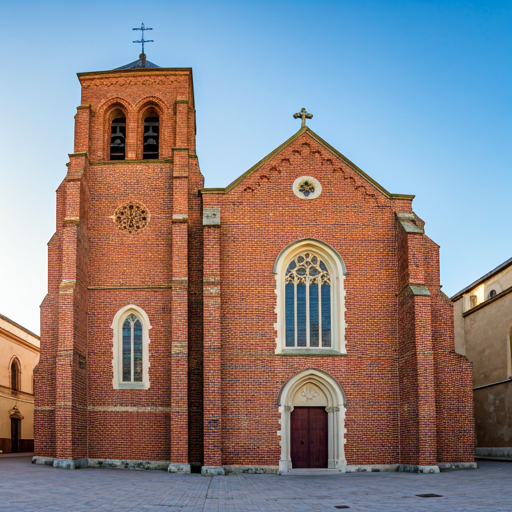
The Church of St Mary the Virgin, Willesborough, is a church predominantly of the C13-C15, with fragmentary Saxon survival and c1868 extension and restoration. MATERIALS: the church is constructed of rag stone rubble, with a tiled roof and cedar shingles to the spire. PLAN: the building has a 5-bay nave, with tower to the W, and chancel to the E. The predominantly C15 south aisle has a chantry (now memorial chapel) to the E and a porch to the S. To the N of the nave is a c1868 aisle, and a vestry of similar date to the N of the chancel. EXTERIOR: the tower has corner buttresses and a bipartite spire: square below (like the base of a broached spire) and octagonal above. There is a multiply-moulded shafted W doorway, with cusped lancet above, and a later S lancet and clock, the latter installed at Queen Victoria’s diamond jubilee. The Perpendicular S aisle is separately gabled and has paired cusped lights under square heads and an arched three-light E window. The W end of the aisle contains some Saxon fabric, as evidenced by the remains of a small blocked window high on the W gable end. At the E end of the aisle the stone plinth of the last bay, and diagonal corner buttress, marks the chantry, added in the C15. The chancel has a handsome five-light Decorated E window with ogival cusped lights and a large quatrefoil in the apex. The two-light N and S windows follow a similar pattern, and all three windows have fine carved head corbels. There is a blocked doorway below the S window. To the north is the C19 vestry and separately gabled N aisle, the latter having three-light Decorated windows. INTERIOR: the S arcade has four piers: two round (W) and two octagonal (E); these support wide double-chamfered arches. The C19 N arcade is an exact copy. The nave roof has common rafters with braced collars; the C15 roof of the S aisle has octagonal molded crown posts with four up-braces, resting on molded tie-beams. This structure is repeated in the S porch and replicated in the C19 north aisle. The chancel arch has head corbels; adjacent and high up to the S, is a rood-loft doorway. In the chancel is a Decorated piscina and triple sedilia on the S wall. Over the S door, within the porch, is what appears to be a heavily weathered head corbel. The scratch (or mass) dials on the inner face of the south door suggest the stones which now form the inner reveal of the doorway have been relocated from outside the church. Just to the E of the doorway is a water stoup, and further to the E, by the entrance to what is now the memorial chapel, is a piscina. The liturgical furniture and pews are generally C19, with that in the memorial chapel being mid C20 and including a Roll of Honour on the panelling to either side of the reredos. The organ is late C19, with the choir organ being added in memory of those who gave their lives in the First World War. There are various memorials within the church, the most elaborate being the Warton memorial on the N side of the chapel. Made from Bethersden marble with a central relief bust, it commemorates Charles Warton who died in 1863 and Lucy, his wife, who died in 1896. The church is floored predominantly with C19 encaustic tiles. STAINED GLASS The N and S chancel windows contain C14 glass, that to the N being particularly complete, depicting saints standing under tabernacles. The S window largely dates from 1868, but is thought to include glass from the original E window, which recorded Edward III’s granting of a licence to Abbot John of St. Augustine’s Abbey in 1349. The three-light E window over the chapel alter contains some C15 glass. All the medieval glass was reset in 1868 by Clayton and Bell, who designed the E window, which features scenes from the Passion. The W window in the tower is c1848, by William Warrington, and the window over the piscina in the south aisle is by Herbert Bryans, dedicated to the memory of the Reverend T. F. Dixon, rector from 1886 to 1903.
Listing metadata — from the National Heritage List for England
- NHLE entry number:
- 1071042
- Heritage Category / Grade:
- Listed Building, Grade II*
- First listed:
- 1951
- Last amended:
- 2014
- Capture scale:
- 1:2500
- Grid reference (NGR):
- TR0292341529
- BNG Easting / Northing:
- 602,923 E / 141,530 N
- Coordinates (WGS84):
- 51.137073°N, 0.899294°E
- Parish:
- Non Civil Parish
- District:
- Ashford
- Kent Downs landscape zone:
- Brook and the Spring-Line Villages
- Distance to North Downs Way:
- 3.47 miles
- Distance from The King's Head:
- 3.68 miles
- Walk duration (round trip):
- 147 minutes
- Elevation gain:
- 80 m
- Difficulty rating:
- Moderate
Architectural features at Church Of St Mary The Virgin
Keywords extracted from Historic England’s Official List Entry — each one is genuinely in the designation prose, not inferred.
Listing history of Church Of St Mary The Virgin
-
1951 · first listed
Added to the National Heritage List for England at Grade II*.
-
2014 · designation amended
The listing record was revised 63 years after the original designation.
Other Grade II* walks in Non Civil Parish
| Listing | Grade | Parish | Distance from Wye |
|---|---|---|---|
| Walking to Willesborough Windmill from The King’s Head — 3.3-Mile Circular via Non Civil Parish | Grade | — | 3.3 miles |
| Walking to Bridge House from The King’s Head — 3.6-Mile Circular via Non Civil Parish | Grade | — | 3.6 miles |
| Walking to Nightingale House from The King’s Head — 3.7-Mile Circular via Non Civil Parish | Grade | — | 3.7 miles |
| Walking to Whist House from The King’s Head — 3.8-Mile Circular via Non Civil Parish | Grade | — | 3.8 miles |
| Walking to The College from The King’s Head — 3.8-Mile Circular via Non Civil Parish | Grade | — | 3.8 miles |
| Walking to The Doctor Wilks Memorial Hall from The King’s Head — 3.8-Mile Circular via Non Civil Parish | Grade | — | 3.8 miles |
Buildings listed in the 1950s near Wye
| Listing | Grade | Parish | Distance from Wye | Listed |
|---|---|---|---|---|
| Walking to Wye Bridge from The King’s Head — 0.4-Mile Easy Stroll via North Downs Way | Grade II* | Wye with Hinxhill | 0.4 miles | 1952 |
| Walking to Spring Grove And Walled Garden Attached from The King’s Head — 0.8-Mile Easy Stroll via North Downs Way | Grade II* | Wye with Hinxhill | 0.8 miles | 1952 |
| Grade I Heritage Walk: Walking to Church Of All Saints from The King’s Head — 1.6-Mile Easy Stroll via North Downs Way | Grade I | Boughton Aluph | 1.6 miles | 1957 |
| Walking to Boughton Court from The King’s Head — 1.6-Mile Easy Stroll via North Downs Way | Grade II* | Boughton Aluph | 1.6 miles | 1952 |
| Grade I Heritage Walk: Walking to Church Of St Mary from The King’s Head — 1.7-Mile Easy Stroll via Brook | Grade I | Brook | 1.7 miles | 1957 |
The landscape around Church Of St Mary The Virgin — Brook and the Spring-Line Villages
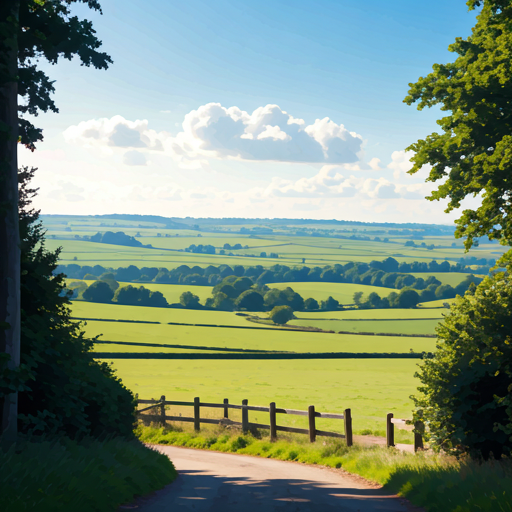
South of the North Downs escarpment, the land around Brook and the adjacent parishes is a quiet band of spring-line settlement where chalk meets gault clay. The villages grew where water came to the surface, and each church in this belt — many Grade I listed and of Norman or earlier origin — occupies one of those spring-heads. Between them the land is a patchwork of sheep pasture, small fields of winter cereals, and hedgerow-enclosed paddocks of yew, hawthorn and blackthorn. The combination of intact medieval churches, surviving ancient hedgerows, and the dramatic backdrop of the downs above is a landscape character that has scarcely changed in 400 years.
Pubs within 3 miles of Church Of St Mary The Virgin
| Pub | Distance from route | Address | Postcode | Authority |
|---|---|---|---|---|
| The Honest Miller open_in_new | 2.5 miles | Brook, Ashford, TN25 5PF | TN25 5PF | Ashford |
Plan your visit
Every walk on this site starts and finishes at The King’s Head — Bridge Street, Wye, TN25 5EA.
Frequently asked about Church Of St Mary The Virgin
How far is Church Of St Mary The Virgin from The King's Head?
When did Historic England last amend the Church Of St Mary The Virgin listing?
Which other Grade II* walks are in Non Civil Parish?
Heritage data © Historic England NHLE · Trail & landscape data © Natural England (Open Government Licence) · Pub locations published under the Open Government Licence.