Walking to Evegate Manor from The King’s Head — 5.0-Mile Circular via Smeeth
Evegate Manor — a Grade II* listed building 5.0 miles from The King's Head, Wye.
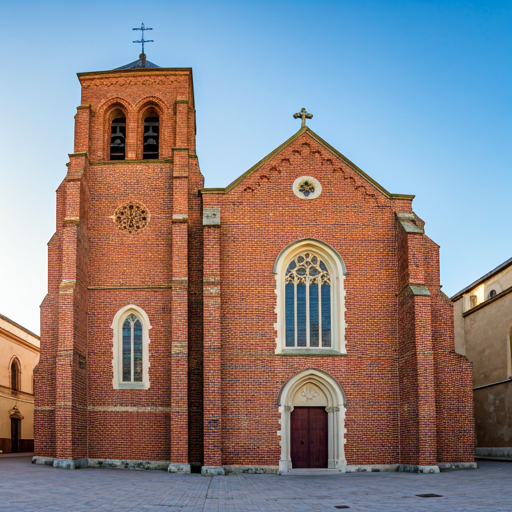
Evegate Manor is a red brick in Smeeth, 5.0 miles from The King’s Head. The NHLE entry singles out its gable. Historic England listed it in 1957.
Walking to Evegate Manor — 5.0 miles from Wye
Rated Challenging at 5.0 miles with about 80m of ascent. Allow around 198 minutes at a steady 3 mph pace; add 15–20 minutes for photographs at the building and a pause at a viewpoint.
Why Evegate Manor is Grade II* listed — the 1957 designation
The building or site itself may lie within the boundary of more than one authority.
- Grade:
- II*
- Listed:
- 1957
- Parish:
- Smeeth
- District:
- Ashford
- Statutory address:
- Evegate Manor, Station Road
- NHLE entry:
- 1362798 ↗
SMEETH 1419/4/140 STATION ROAD 27-NOV-57 (East side) EVEGATE MANOR II* Originally a manor house, later farmhouse, now house. Remains of early C14 open hall and service end with contemporary south western crosswing. Early C16 south western wing first floor and roof and early C16 north eastern wall which is now internal. Northern range extensively refurbished in early C17 and south eastern range added in C18. Circa 1965 refenestration. Mainly Kentish ragstone rubble with red brick dressings but crosswing part timberframed and first floor of part of west side red brick and tile hung. Plain tiled roofs with brick chimneystacks. Two parallel ranges and south western crosswing. Northern range originally comprised the open hall with service end which was later truncated and adapted to form a lobby entrance house in the early C17. South eastern range is C18. Two storeys: irregular fenestration, mainly C20 wooden mullioned and transomed casements with leaded lights. EXTERIOR: North or entrance front of two storeys on plinth with a very steeply pitched hipped roof with central clustered brick chimneystack. Mid C20 mullioned and transomed windows, 3 on 1st floor, 2 on ground floor, occupying openings partly blocked with C17 or earlier red brick. Central C20 plank and stud door opposite chimneystack. Two massive stone clasping offset buttresses to north west corner. Projecting brick outshot to north east with wooden casement and half-glazed door. West front has two windows to end of northern range with blocked basement opening and infilled segmental arches now with smaller C18 brick lined openings. The right side ground floor opening was a door at one time. The eastern wall to the C14 wing has stone rubble to the ground floor and a mixture of brick and tile-hanging to the first floor. South front of crosswing has gable with casement window to first floor but ground floor has a C14 small round-headed lancet with single shaped keystone of C14 date. The remainder of the south front is C18 of stone rubble with some galleting, hipped roof and off central brick chimneystack. Three C20 mullioned and transomed windows to first floor, two on ground floor and central bay with C20 glazed door. East side is also of stone rubble with some galleting and retains some C19 casements in earlier brick surounds, one originally a doorcase. There are outshots to both north and south ranges and a C20 conservatory. INTERIOR: South western crosswing ground floor room has an internal plinth, C14 lancet window and a blocked round-headed opening adjoining to the west. Early C16 ceiling beams of square section with an iron hook, probably of C18 date, suggest the room was adapted to form a larder at one time. C18 brick floor. The southern wall of the northern range contains a small internal window against the C18 southern range, its outer or SE face having colonnettes with mutilated caps and bases, probably early C14 or earlier and possibly once an aumbry or piscina. The first floor above the south western crosswing has a central open truss with solid arch braces to a simple tie beam and a simple collar rafter roof above of circa 1500-1535. The northern range former open hall and service end were much altered, first in the early C16 by the insertion of an eastern wall with midrail and close-studding (now internal), but mainly in the late C16 or early C17 by the insertion of a chimneystack and floor. This includes chamfered ceiling beams with runout or lambs tongue stops, cross beams with roll moulding and jowled posts. There are a number of good quality early C17 ovolo-moulded door surrounds with carved circular stops and studded doors. The C18 southern range has ogee-shaped braces to the first floor. The massive late C16 inserted chimneystack to the northern range is visible in the roof space. The northern range has a staggered purlin roof of C17 and C18 date with reused timbers and has three sides of an C18 lath and plaster partition remaining, probably for storage of some kind. HISTORY: Evegate Manor is recorded in Domesday Book and later became a sub-manor of the Archbishop of Canterbury’s manor of Aldington. From at least 1307 to 1452/3 it was held by the Passele or Pashley family. The stone open hall may have been built for Sir Edmund Pashley, who inherited in 1341 and died in 1361. After the mid C15 it passed first to the Pimpes of Nettlestead Place and then to the Scotts of Scott Hall. The will of Sir Thomas Scott, dated 17 Dec 1594 has this codicil “That my executors shall finish the buildings which I have begonne at Thevegate for Dame Dorothie, my wife”. (pers. Comm. D. Skeer, Smeeth. This may refer to the late C16 and early C17 refurbishment of Evegate Manor. The Scotts of Scotts Hall held the manor until the late C18. In 1965 the building was sold off separately from the adjoining farm. [“Buildings of England: North East and East Kent” 1969, revised 1976 and 1989 P465. RCHME Report on Evegate Manor dated July 1988 by Sarah Pearson. RCHME Gazetteer of Mediaeval Houses in Kent 1994 pps 115-6. RCHME The Mediaeval Houses of Kent” 1994.]
Listing metadata — from the National Heritage List for England
- NHLE entry number:
- 1362798
- Heritage Category / Grade:
- Listed Building, Grade II*
- First listed:
- 1957
- Capture scale:
- 1:2500
- Grid reference (NGR):
- TR 06822 38975
- BNG Easting / Northing:
- 606,822 E / 138,975 N
- Coordinates (WGS84):
- 51.112735°N, 0.953468°E
- Parish:
- Smeeth
- District:
- Ashford
- Kent Downs landscape zone:
- Brook and the Spring-Line Villages
- Distance to North Downs Way:
- 4.85 miles
- Distance from The King's Head:
- 4.95 miles
- Walk duration (round trip):
- 198 minutes
- Elevation gain:
- 80 m
- Difficulty rating:
- Challenging
Architectural features at Evegate Manor
Keywords extracted from Historic England’s Official List Entry — each one is genuinely in the designation prose, not inferred.
Buildings listed in the 1950s near Wye
| Listing | Grade | Parish | Distance from Wye | Listed |
|---|---|---|---|---|
| Walking to Wye Bridge from The King’s Head — 0.4-Mile Easy Stroll via North Downs Way | Grade II* | Wye with Hinxhill | 0.4 miles | 1952 |
| Walking to Spring Grove And Walled Garden Attached from The King’s Head — 0.8-Mile Easy Stroll via North Downs Way | Grade II* | Wye with Hinxhill | 0.8 miles | 1952 |
| Grade I Heritage Walk: Walking to Church Of All Saints from The King’s Head — 1.6-Mile Easy Stroll via North Downs Way | Grade I | Boughton Aluph | 1.6 miles | 1957 |
| Walking to Boughton Court from The King’s Head — 1.6-Mile Easy Stroll via North Downs Way | Grade II* | Boughton Aluph | 1.6 miles | 1952 |
| Grade I Heritage Walk: Walking to Church Of St Mary from The King’s Head — 1.7-Mile Easy Stroll via Brook | Grade I | Brook | 1.7 miles | 1957 |
The landscape around Evegate Manor — Brook and the Spring-Line Villages
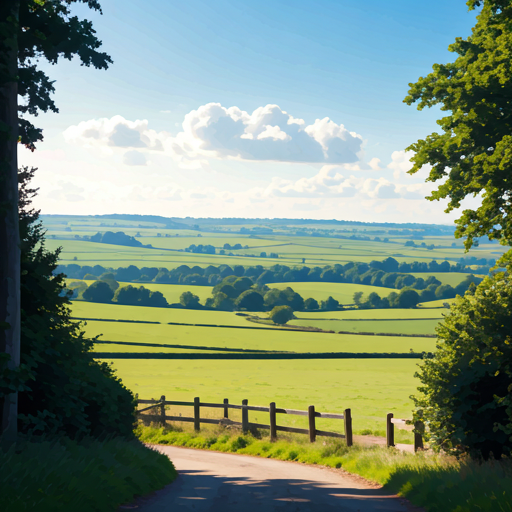
South of the North Downs escarpment, the land around Brook and the adjacent parishes is a quiet band of spring-line settlement where chalk meets gault clay. The villages grew where water came to the surface, and each church in this belt — many Grade I listed and of Norman or earlier origin — occupies one of those spring-heads. Between them the land is a patchwork of sheep pasture, small fields of winter cereals, and hedgerow-enclosed paddocks of yew, hawthorn and blackthorn. The combination of intact medieval churches, surviving ancient hedgerows, and the dramatic backdrop of the downs above is a landscape character that has scarcely changed in 400 years.
Pubs within 3 miles of Evegate Manor
| Pub | Distance from route | Address | Postcode | Authority |
|---|---|---|---|---|
| The Honest Miller open_in_new | 2.9 miles | Brook, Ashford, TN25 5PF | TN25 5PF | Ashford |
Plan your visit
Every walk on this site starts and finishes at The King’s Head — Bridge Street, Wye, TN25 5EA.
Frequently asked about Evegate Manor
How far is Evegate Manor from The King's Head?
Heritage data © Historic England NHLE · Trail & landscape data © Natural England (Open Government Licence) · Pub locations published under the Open Government Licence.