Grade I Heritage Walk: Walking to Godinton from The King’s Head — 4.9-Mile Circular via Great Chart with Singleton
Godinton — a Grade I listed building 4.9 miles from The King's Head, Wye.
Godinton is a red brick in Great Chart with Singleton, 4.9 miles from The King’s Head. The NHLE entry singles out its crown-post. Historic England listed it in 1952.
Walking to Godinton — 4.9 miles from Wye
Rated Challenging at 4.9 miles with about 140m of ascent. Allow around 196 minutes at a steady 3 mph pace; add 15–20 minutes for photographs at the building and a pause at a viewpoint.
Why Godinton is Grade I listed — the 1952 designation
The building or site itself may lie within the boundary of more than one authority.
- Grade:
- I
- Listed:
- 1952
- Parish:
- Great Chart with Singleton
- District:
- Ashford
- Statutory address:
- Godinton
- NHLE entry:
- 1071511 ↗
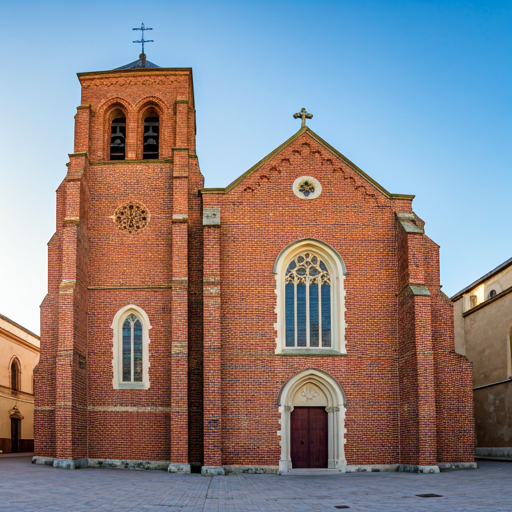
1. 5272 GREAT CHART GODINTON PARK Godinton TQ 94 SE 15/30B 17.9.52 I 2. This mansion and estate belonged to the Toke family from about 1450 to 1895. The house has a mediaeval courtyard house as its core. In 1628 Nicholas Toke (1588-1680) built a large L-shaped house around this. Its main front faces east and is E-shaped. Two storeys and attics in the gables, built of red brick. Moulded stone cornice above each floor. Tiled roof, 6 casement windows with wooden mullions and transoms. The projecting end wings of the ‘E’ have shaped Dutch gables over them. The centre portion has 2 similar gables, beneath which are 2 large bays on the ground and first floors, containing windows of 2 tiers of 8 lights on the ground floor and of 3 tiers of 8 lights on the first floor. The other windows have 2 tiers of 3 lights. Parapet between the gables. Central single storeyed porch, with pointed stone archways at the side and round-headed stone archway in front surmounted by a curved pediment. Rainwater heads, with the initials NT in those in the angles of the projecting wings and the date 1628 in the centre one above the porch. The north, or entrance front, of the original C17 portion has 4 windows. The end window bays project with moulded stone cornices above each floor, shaped Dutch gables over and beneath these bays on the ground and first floors, containing windows of 3 tiers of 8 lights on the ground floor and 2 tiers of 8 lights on the first floor. The recessed portion between has 2 windows on the ground floor, a stone cornice above the ground floor only and at a higher level than that across the bays, a parapet over and a 2 storeyed porch with a shaped Dutch gable over, containing a cartouche of the arms of the Toke family. The brickwork of this front has been renewed except the parapet. The return south front of the east wing has 2 windows on the ground and first floor, which contain 2 tiers of 2 lights, 2 tiny triangular attic windows with a stone sundial between these, a red brick chimney stack above the sundial and another rainwater head dated 1628. The remainder of the south front was added about 1760 by John Toke (1737-1819). This has 5 windows, 2 shaped Dutch gables, sash windows with segmental heads in stuccoed surrounds with glazing bars intact, and a doorway at the east end with narrow pilasters, flat hood on brackets and rectangular fanlight. This was part of an L-shaped addition which made the house into a complete square with an internal courtyard. Beyond this addition is a further L-shaped addition in the north-west corner, built between 1791 and 1837 in matching style, with a porch in the angle of the C19 addition. The interior contains the hall to the original mediaeval courtyard house, probably of C14 date, with massive tie beam and crown post. The canted ceiling dates from the 1620s. There is some fine linenfold panelling, circa 1520, and a Bethersden marble chimney piece. The dining room also contains a Bethersden marble chimney piece. The library contains some fine panelling and an overmantel dated 1631. Very fine staircase dated 1628, with heraldic beasts on the newels and long-haired female figure on the upper balcony. The friezes are decorated with foliage and dragons. Turned balusters. C16 continental stained glass in the staircase gallery windows. The chapel above the hall was originally the solar. It was redesigned by Sir Reginald Blomfield. The Great Chamber has some exceptionally fine panelling of circa 1630 with lozenge decorations in each panel, pilasters of 2 patterns and a frieze mainly depicting contemporary soldiers at drill. Chimney piece of Bethersden marble; having carved stone lintel and a carved wooden overmantel depicting field sports. The White Drawing Room has a plaster ceiling by Sir Reginald Blomfield. Listing NGR: TQ9820443876
Listing metadata — from the National Heritage List for England
- NHLE entry number:
- 1071511
- Heritage Category / Grade:
- Listed Building, Grade I
- First listed:
- 1952
- Capture scale:
- 1:2500
- Grid reference (NGR):
- TQ 98203 43860
- BNG Easting / Northing:
- 598,203 E / 143,860 N
- Coordinates (WGS84):
- 51.159650°N, 0.833181°E
- Parish:
- Great Chart with Singleton
- District:
- Ashford
- Kent Downs landscape zone:
- Crundale and the Western Ridge
- Distance to North Downs Way:
- 2.99 miles
- Distance from The King's Head:
- 4.91 miles
- Walk duration (round trip):
- 196 minutes
- Elevation gain:
- 140 m
- Difficulty rating:
- Challenging
Architectural features at Godinton
Keywords extracted from Historic England’s Official List Entry — each one is genuinely in the designation prose, not inferred.
The furthest Grade I walk in the catalogue
Buildings listed in the 1950s near Wye
| Listing | Grade | Parish | Distance from Wye | Listed |
|---|---|---|---|---|
| Walking to Wye Bridge from The King’s Head — 0.4-Mile Easy Stroll via North Downs Way | Grade II* | Wye with Hinxhill | 0.4 miles | 1952 |
| Walking to Spring Grove And Walled Garden Attached from The King’s Head — 0.8-Mile Easy Stroll via North Downs Way | Grade II* | Wye with Hinxhill | 0.8 miles | 1952 |
| Grade I Heritage Walk: Walking to Church Of All Saints from The King’s Head — 1.6-Mile Easy Stroll via North Downs Way | Grade I | Boughton Aluph | 1.6 miles | 1957 |
| Walking to Boughton Court from The King’s Head — 1.6-Mile Easy Stroll via North Downs Way | Grade II* | Boughton Aluph | 1.6 miles | 1952 |
| Grade I Heritage Walk: Walking to Church Of St Mary from The King’s Head — 1.7-Mile Easy Stroll via Brook | Grade I | Brook | 1.7 miles | 1957 |
The landscape around Godinton — Crundale and the Western Ridge
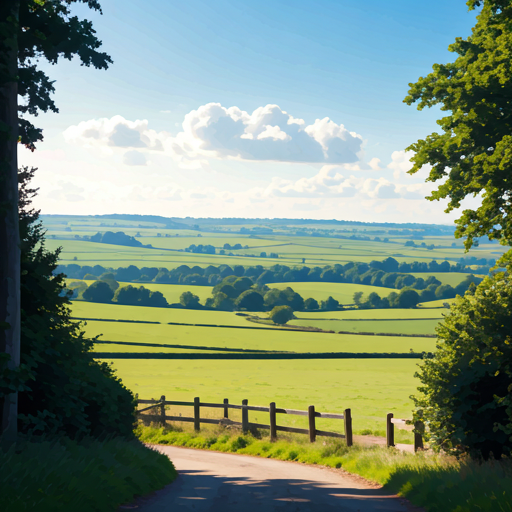
West of Wye the dip-slope climbs towards Crundale, Godmersham and the high ground above the Great Stour. This is wooded downland — pockets of beech hanger and coppice hazel survive on the steeper flanks, interleaved with sheep pasture and long-fallow headlands managed for wild flowers. Country houses of the 17th and 18th centuries (Godmersham Park among them) sit in mature parkland where the hedgerow oaks are old enough to have been saplings when the house was built. Footpaths here are sunken lanes and green roads — often the North Downs Way itself, which threads along the scarp-top before dropping back towards the village.
Pubs within 3 miles of Godinton
| Pub | Distance from route | Address | Postcode | Authority |
|---|---|---|---|---|
| The Dering Arms open_in_new | 2.2 miles | Pluckley, TN27 0RR | TN27 0RR | Ashford |
Plan your visit
Every walk on this site starts and finishes at The King’s Head — Bridge Street, Wye, TN25 5EA.
Frequently asked about Godinton
How far is Godinton from The King's Head?
Heritage data © Historic England NHLE · Trail & landscape data © Natural England (Open Government Licence) · Pub locations published under the Open Government Licence.